SleepLean Review 2025: Honest Insights,Real User Experiences
If you’ve been scrolling through wellness blogs, online health forums, or late-night infomercials, you’ve probably run into SleepLean — a supplement claiming to help you lose weight while you sleep. It sounds too good to be true, right? Because often, it is. In this article, we’re going to dig deep into what SleepLean really is, critically examine the reviews (especially the suspicious ones), check the science behind the ingredients, expose common pitfalls, and help you decide whether it’s legit or just hype. Strap in, because there’s a lot to unpack.

Table of Contents
1. What Is SleepLean?
- SleepLean is a dietary supplement marketed as a nighttime fat-burner. The idea: you take capsules before bed, and while your body rests, certain “natural” ingredients will boost metabolism, reduce cravings, control hormones like cortisol, and thus help you lose weight without stimulants.
- It’s presented as plant-based, non-GMO, produced in GMP-certified facilities, etc.
2. The Promise: What SleepLean Claims
SleepLean’s marketers make several bold promises:
- Lose weight while you sleep (without extra workouts or restrictive diets) by supporting natural sleep cycles.
- Reduce nighttime cravings and emotional eating, especially in people stressed or with poor sleep hygiene.
- Improve sleep quality (deeper rest, fewer wake-ups) so your body can recover better, which purportedly helps with weight management.
- Natural formula without stimulants, minimal side effects.
Sounds great. But the claims are often vague: how much weight, in how long, under what conditions, etc. That ambiguity is a common tactic in marketing.

3. Fake Reviews & Marketing Tactics
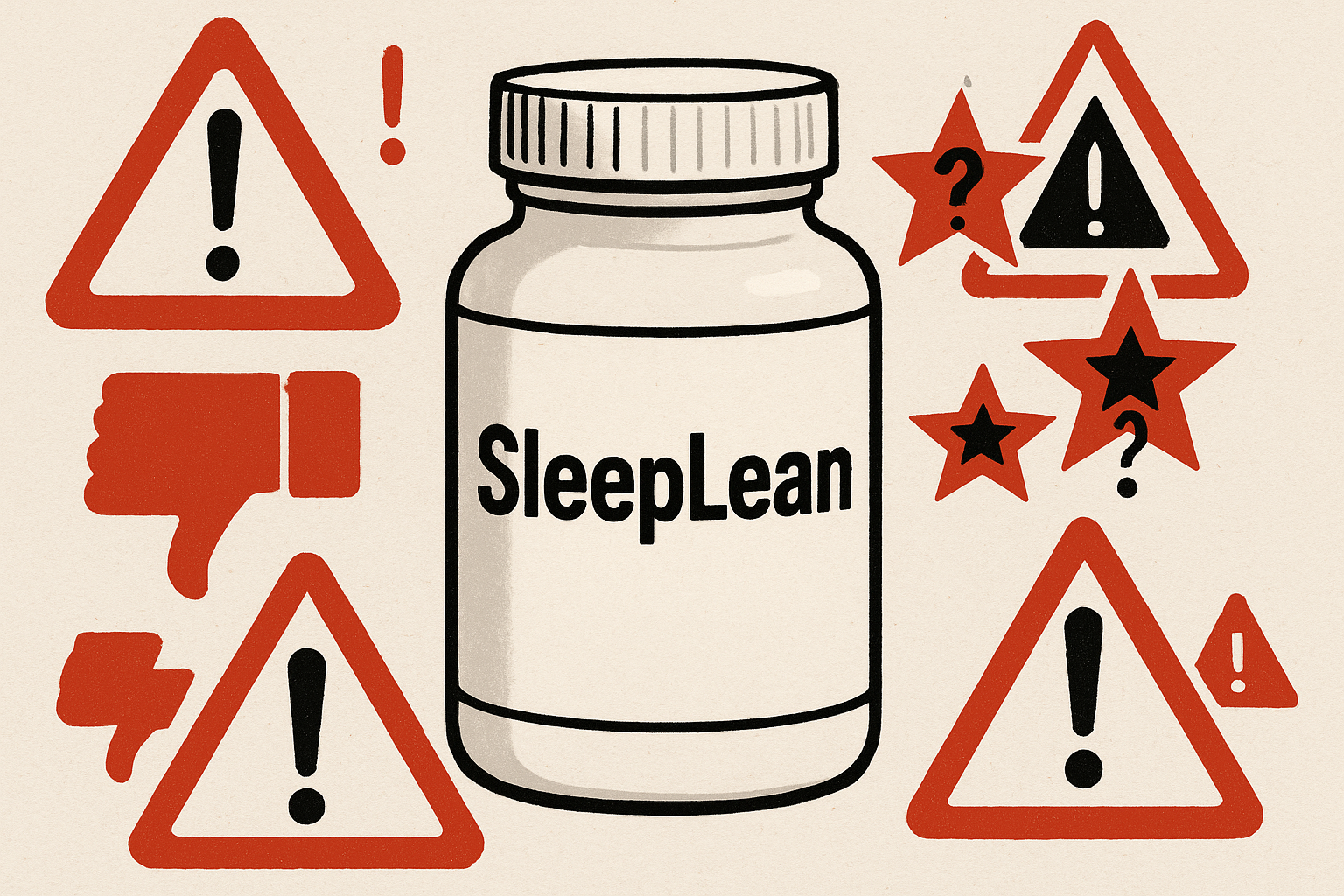
This is where SleepLean’s story gets murky. There are consistent reports of fake reviews, unauthorized resellers, and questionable marketing practices.
- Many complaints and negative reviews come from people who did not buy the product through the official site. These people often report fake bottles, missing capsules, odd smells, or products that didn’t work.
- Some marketing pieces appear on sites that function more like affiliate-driven content or “lead magnets,” with lots of praise but very little detail — often encouraging purchases from certain URLs.
- Disclaimers about needing several weeks of consistent use (4–8 weeks or more) are often pushed aside, and many reviews showing dramatic weight loss after very short periods (1–2 weeks) are likely exaggerated or fabricated.
4. Uncovering the Red Flags
Here are specific warning signs you should watch out for. Many of them crop up in SleepLean’s case.
| Warning Sign | What to Look for in SleepLean’s Case |
|---|---|
| Overly good testimonials with minimal detail | “I lost 10 lbs in 3 days!” — high numbers, no mention of diet/exercise. Some reviews are extremely generic. |
| Sponsored/affiliate-heavy review sites | Many SleepLean reviews seem to be designed to funnel you toward “official” purchase links. |
| Lack of ingredient dose transparency | Proprietary blends hide exact amounts of each ingredient; some critical ones (e.g. berberine) may not be present in effective doses. |
| Multiple URLs with “official site” claims | There are many lookalike domains; sites with very low trust scores; some with hidden ownership. |
| Promotions that emphasize scarcity or discounts to push you to buy quickly | Heavy discounting, bulk orders (buy 3 get 2 free), “while supplies last” claims — these are typical of aggressive direct-response marketing. |
5. Ingredients: Science or Smoke?
Let’s dig into what SleepLean reportedly contains, and whether there is scientific support for the claims.
Key Ingredients Usually Listed:
- Valerian Root
- Hops
- 5-HTP (precursor to serotonin)
- Berberine
- Spirulina Blue
- Black Cohosh
- Lutein
- Inulin
What the Research Suggests
- 5-HTP: Can increase serotonin, which might help with mood and reduce appetite; plausible in reducing cravings, though effects can vary.
- Berberine: There is evidence it helps insulin sensitivity and might aid metabolism. But effective doses in clinical settings tend to be much higher and split through the day, not just a single capsule at night.
- Valerian Root, Hops: Often used in sleep‐aids; some benefit for sleep onset/fall asleep time, but results vary a lot among people.
- Black Cohosh: Primarily studied for menopausal symptoms; less evidence for sleep or weight‐loss in non-menopausal populations.
- Lutein: More known for eye health; claims about blue light protection/systemic “blocking” are speculative.
Major Weaknesses
- Proprietary blend = no clear dose breakdown. Even if an ingredient is listed, we may not know how much is there, which matters a lot.
- Many ingredients with modest evidence individually, but no strong clinical trials for the combo as SleepLean sells it.

6. Do People Actually Get Results?
What do verified users report? Real results vs. hype.
What many people say they saw:
- Better sleep: falling asleep faster, fewer interruptions, waking up more rested.
- Reduced nighttime cravings and emotional eating.
- Some weight loss, often modest and gradual over several weeks (4–8 weeks and beyond).
What many do not experience, or report less of:
- Dramatic weight loss overnight.
- Same results regardless of lifestyle — diet, activity, sleep hygiene still matter.
- Immediate effects; many mention needing at least 2 to 4 weeks (sometimes longer).
So: yes, some real people report positive changes — especially in sleep and cravings — but weight loss tends to follow slowly and isn’t guaranteed.
7. Side Effects, Risks & Who Should Be Cautious
While marketed as natural and low-risk, there are still possible side effects and risk factors to consider.
Possible Side Effects
- Drowsiness or grogginess, especially if taken too early or combining with other sedatives.
- Digestive discomfort, bloating, or more frequent bathroom visits early on.
- Headaches in some, possibly due to melatonin, 5-HTP, or other herb combinations.
Who Should Be Cautious or Avoid It
- Pregnant or nursing women.
- Persons under 18.
- People taking medications or supplements that interact with sleep aids, serotonin boosters (5-HTP), or other hormones.
- Those with severe sleep disorders — SleepLean is not a substitute for medical treatment.
- Anyone with unrealistic expectations — expecting overnight miracles may lead to disappointment.
8. How to Spot Fake Bottles and Scam Sites
This is especially important given how many complaints of counterfeit or low-quality bottles exist.
Here are actionable tips:
| Check This | What to Look For |
|---|---|
| URL / Domain | Make sure you’re on the official SleepLean website. Avoid lookalikes, low-trust “.online” sites, hidden domain ownership, or very new domains. |
| Label / Packaging | Seals intact, consistent labeling, spelling / grammar errors as red flags, batch numbers, manufacturing info, expiry date. |
| Ingredient List with Doses | If it’s a “proprietary blend” without doses, that’s not always wrong, but less transparent. Lack of dose info is suspicious. |
| Too Good Discounts | If the discount is very large (50-70%) or claims like “today only”, they might be pushing fake or past-expiry stock. |
| Refund / Guarantee | Official site seems to offer 60- to 90-day money-back guarantees. Make sure that’s clearly stated and credible. Third-party vendors often don’t honor this. |
9. Price, Refunds, and Where to Buy
Understanding cost and where to purchase safely can save you from wasted money and bad experiences.
- Price: SleepLean is usually priced between $39 to $79 per bottle, depending on the supply (1 bottle, multi-bottle deals).
- Refund Policy: Generally, there is a 60-day to 90-day money-back guarantee when you buy from the official site. But note: to claim the guarantee, you often have to buy directly and possibly provide photo evidence or return the bottle.
- Where to Buy Safely: The official SleepLean website is the safest route. Listings on Amazon, Walmart’s marketplace, eBay, or “health shops” are riskier and often flagged as selling fake or diluted product.
10. Should You Trust SleepLean?
After analyzing all the evidence, here are my takeaways.
What looks promising
- There is a credible link between poor sleep and weight gain. Sleep affects hunger hormones (ghrelin, leptin), cortisol, insulin sensitivity. Anything that truly improves sleep can contribute to better health and weight control.
- Some of the ingredients in SleepLean do have scientific support in certain contexts (e.g. moderate sleep aids, appetite regulation).
- The company’s guarantee and many user reviews suggest that for some people, SleepLean does produce noticeable improvements — particularly in sleep, mood, cravings.

What raises doubt
- The reliance on proprietary blends without dose disclosure is a major issue. Hard to verify if you are getting enough of the active substances.
- The prevalence of fake reviews and duplicate content across affiliate-heavy sites makes it hard to separate real feedback from marketing.
- Results seem to strongly depend on individual variation: diet, sleep hygiene, consistency. It’s not a one-size-fits-all solution.
- Any claims of dramatic weight loss (e.g. “10+ lbs in a week”) are almost certainly exaggerated or coming from fake or cherry-picked reviews.
11. Conclusion
SleepLean may not be a scam in the sense of being completely fake, but there is enough murky territory to approach it with caution. If you are considering using it:
- Be sure to buy from the official site to avoid counterfeits.
- Don’t expect miracles overnight. Real, sustainable weight loss takes time, consistent usage, good sleep habits, decent diet, and possibly exercise.
- Pay attention to how your body responds — if you have side effects, stop and consult a professional.
- Examine reviews critically: look for detailed stories (what changed, when), not just “it’s amazing.”
- Use the money-back guarantee if you don’t see effects after an honest trial period (e.g. 30-60 days or more).
At the end of the day, nothing replaces the basics: quality sleep, balanced diet, regular activity. Supplements like SleepLean might help some people, especially those whose weight struggles are tightly linked to poor sleep and high stress — but it’s likely not a magic bullet.